
Forklift Safety Training
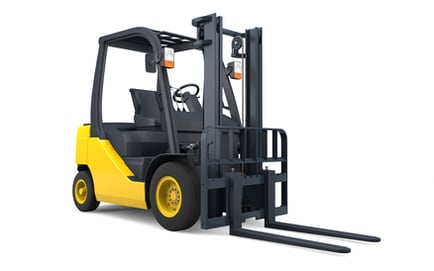
Forklifts are fairly large pieces of equipment that rely on several moving parts and a considerable amount of power.
The power of forklifts makes them indispensable yet also dangerous. When forklift injuries occur they are often serious given the tremendous weight and power of the equipment. OSHA estimates that there are almost 35 thousand accidents a year that result in serious injuries from forklifts and another 61 thousand resulting in non-serious injuries. Around 85 fatalities occur annually due to accidents involving forklifts and 42 percent of those fatalities are due to the operator being crushed by a tipping vehicle. It is crucial that employers help workers understand the dangers of operating a forklift.
The role of the forklift operator is crucial when it comes to ensuring correct and safe operation of a forklift. Having trained and certified operators is a must for business owners, trained and skilled drivers are able to move heavy goods in a fast, steady and careful manner reducing the risk of accident as well as inventory loss while increasing overall productivity. It is also required by OSHA that all operators of forklifts be properly trained. Refresher training for the experienced operator is just as important as first-time training for new employees. Hazard recognition and the assessment of certain complicated worksite areas are also important to note when it comes to operating forklifts as safely as possible.
When observing an operator using material handling equipment is important to address the following:
- The driver should always wear a seat belt
- The operator should always operate at safe speeds
- The driver should always sound the horn when approaching blind spots, end of aisles or backing up
- When transporting a load, the load should always remain 6” to 10” off of the floor
- The driver’s visibility should always be clear
- The operator should use a spotter when the load is blocking his visibility
- Companies that do not emphasize safety and ongoing training of their drivers are easy to spot with these quick observations
Business owners play, perhaps, the most important part in seeing to it that safety training at their worksites is a prime concern. Discussing the importance of forklift safety training is a great step, but management should have a specific safety strategy in place tailored to their unique working environment. By implementing a forklift safety program companies can help prevent unavoidable accidents. The key to forklift safety is to be proactive and not reactive.

Search
Categories
- Safety Management (90)
- Workplace safety (62)
- Safety Tips (45)
- Safety training (41)
- OSHA News (30)
- Compliance (28)
- Injury Prevention (27)
- Fall Protection (24)
- Safety Audits (24)
- ISNetworld (21)
- Accidents (19)
- Leadership (19)
- OSHA Inspections (17)
- safety culture (16)
- Human Factors (15)
- Worker Safety (14)
- Accident Investigation (12)
- Best Practices (12)
- OSHA Recordkeeping (12)
- How to Choose a Safety Consultant (11)
- safety and health (11)
- Employee Training (10)
- Safety Perception Surveys (10)
- Mindfulness (9)
- Regulatory News (9)
- SMS (9)
- Safety Coaching (9)
- electrical safety (9)
- safety leadership (9)
- Heat Stress (8)
- Injury Management (8)
- safety systems (7)
- Behavior Based Safety (6)
- Corrective Action Plan (6)
- Heat Illness Prevention (6)
- Job Site Safety (6)
- PSM (6)
- Safety Standards (6)
- Commercial Construction (5)
- Confined Space (5)
- Residential Construction (5)
- Safety Staffing (5)
- Crane Safety (4)
- Environment (4)
- Forklift Safety (4)
- Safe Driving (4)
- Safety Goals (4)
- Safety Jobs (4)
- construction certifications (4)
- safety manual (4)
- Building Contractors (3)
- Hazard Communication (3)
- Hurricane Planning (3)
- avetta (3)
- coronavirus (3)
- Construction Managers (2)
- Contractors (2)
- Drug Testing (2)
- GHS (2)
- Hazardous Energy (2)
- Hearing Conservation (2)
- Heat Illness Symptoms (2)
- OSHA Violation Citations (2)
- PPE (2)
- Reporting (2)
- Roadway Work Zone Safety (2)
- Safety II (2)
- emergency (2)
- fire safety (2)
- ladder safety (2)
- return to work (2)
- safety expert witness (2)
- safety myths (2)
- trench safety (2)
- water accidents (2)
- Confined Space Training (1)
- Dealing with the Media (1)
- Ebola (1)
- Environmental Compliance (1)
- Expert Witness (1)
- Fall Prevention (1)
- Fatigue (1)
- Fatigue Management (1)
- First Aid (1)
- Forklift Training (1)
- Grain Bin Safety (1)
- Hospital Safety (1)
- Hurricane Season (1)
- ISO 45001 (1)
- LOTO (1)
- Labor Law (1)
- Legal (1)
- Loading Dock Safety (1)
- Louisiana Industry News (1)
- Networking (1)
- Pedestrian Safety (1)
- Quality Programs (1)
- Reporting CV-19 cases (1)
- Retail Safety (1)
- Risk Management (1)
- Roofing Contractors (1)
- Safe + Sound Week (1)
- Silica Safety (1)
- Software (1)
- Substance Abuse (1)
- Suicide Prevention (1)
- Sustainability (1)
- Tier 2 Reporting (1)
- VPP (1)
- Violations (1)
- Winter Weather (1)
- Workplace CV-19 cases (1)
- Workplace Harassment (1)
- Youth Workers (1)
- crystalline silica (1)
- ergonomics (1)
- excavations (1)
- fire extinguishers (1)
- flu (1)
- hand hygiene (1)
- handwashing (1)
- health (1)
- incident rate (1)
- job safety analysis (1)
- lockout tagout (1)
- process safety management (1)
- safety coaching in the workplace (1)
- safety complacency (1)
- safety consultant (1)
- safety data (1)
- safety management system (1)
- safety staffing companies (1)
- work fatigue (1)
- worker fatigue (1)
- worker's memorial (1)

