


What They Really Cost Beyond the Fine
 A general contractor in Baton Rouge gets a call from the project owner on a Tuesday morning. OSHA issued a citation on a subcontractor's scaffold setup two weeks ago. The fine itself is manageable. What the contractor didn't expect was the email that followed three days later: the owner's risk management team flagged the citation during a routine prequalification review, and the contractor's account is now under review.
This is the part of a citation most contractors don't see coming. The fine is rarely what hurts. What hurts is everything the fine sets in motion: a stop-work order that idles a crew for two days, an EMR adjustment that raises insurance premiums for three years, and a prequalification flag that quietly removes the company from a bidder list it spent years getting onto.
This article looks past the citation itself to what construction site safety violations actually cost a company in project delays, insurance, and the prequalification platforms that increasingly determine who gets to bid at all. If your company is currently navigating a citation or simply wants to understand the full exposure before one happens, this is the picture that matters.
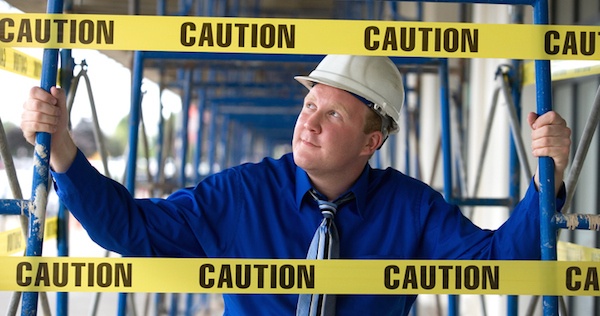
What You'll Learn About Construction Site Safety Violations
- Current OSHA penalty amounts for serious, willful, and repeat violations
- How a single citation can trigger a stop-work order, and what that costs per day
- How violations affect your Experience Modification Rate (EMR) and insurance premiums for years afterward
- Why prequalification platforms like Avetta and ISNetworld treat citations as a standing risk flag
- The most commonly cited OSHA standards in construction, and what drives them
- What to do in the first 72 hours after receiving a citation
- What the prequalification landscape looks like for Gulf Coast contractors specifically
The Citation Is Just the Opening Bill
As of January 15, 2025, OSHA's maximum penalties stand at $16,550 per serious violation and $165,514 per willful or repeated violation. These figures were not adjusted for 2026, and the same maximums remain in effect.
For perspective on where these penalties often occur, fall protection has been OSHA's most-cited construction standard for fifteen consecutive years, and in fiscal year 2025, fall protection general requirements alone generated 5,914 violations, more than double the next standard on the list. Hazard communication and ladders round out the top three, with lockout/tagout, respiratory protection, and scaffolding close behind. These are not exotic regulatory technicalities. They are basic site conditions, and that's precisely why the citations keep coming.
But the citation amount, however large, is a single line item. What follows is where the real cost accumulates.
When a Violation Becomes a Stop-Work Order
A stop-work order is a directive from OSHA, a building inspector, a project owner, or a general contractor requiring some or all jobsite activity to cease immediately. On the federal side, OSHA can pursue an order to restrain conditions that present an imminent danger, meaning a hazard that could reasonably be expected to cause death or serious physical harm before normal enforcement channels could address it. At the project level, stop-work authority is also commonly included in contracts, giving owners and general contractors the ability to halt work directly when a serious hazard is identified, independent of any OSHA action.
The cost of a shutdown extends well beyond the hours during which work is paused. Crews stand idle, subcontractors lose momentum, and equipment sits unused while project leaders shift from progress to crisis management. Labor costs continue. Delivery windows shift. Follow-on trades lose site access. And recovery doesn't happen the moment work resumes. Schedules rarely snap back into place immediately, so a two-day shutdown often results in more than two days of lost productivity.
Ignoring a stop-work order compounds the problem. Continuing work in violation of an active order, whether issued by OSHA or written into a contract, can result in daily fines, civil penalties, contract termination, and, in serious cases, license suspension. The order is non-negotiable at the moment it's issued. There is no version of "finish this one task first."
The Insurance Cost Nobody Sees Coming: EMR
Most contractors understand that a workplace injury affects their Experience Modification Rate (EMR), the metric insurers use to price workers' compensation premiums. Fewer understand that OSHA citations themselves, independent of any injury, become part of the safety record that underwriters evaluate. Willful violations, in particular, can affect how an insurer views a company's risk profile at renewal, regardless of whether anyone was harmed.
The EMR math is unforgiving. According to the National Council on Compensation Insurance, which calculates EMR in most states, an EMR of 1.0 represents the industry average, and the rate is calculated using three years of claims data, excluding the most recent year. That means the financial consequences of a bad year don't show up immediately, and they don't disappear quickly either. A meaningful improvement in EMR, even a few tenths of a point, translates directly into lower premiums. The inverse is also true: a deteriorating EMR can add tens or hundreds of thousands of dollars in premium costs for a mid-sized contractor, depending on payroll and premium size. Safety decisions made today affect premiums for years.
EMR isn't only an insurance line item. Many major construction clients and oil and gas operators require an EMR below 1.0, and some require below 0.85 for higher-hazard work, as a condition of prequalification. An EMR that creeps above that threshold doesn't just cost more. It can disqualify a bid before anyone reviews price or scope.
The Prequalification Platform: Where Citations Follow You
This is the consequence that surprises contractors most often, and it's becoming more significant every year. Major hiring clients in construction, oil and gas, manufacturing, and logistics increasingly require contractors to be prequalified through platforms such as Avetta or ISNetworld before they can bid. These platforms collect OSHA citation history, EMR data, and safety program documentation, and they monitor it continuously, not just at initial registration.
As SafetyPro covered in our recent piece on Safety Improvement Plans vs. Corrective Action Plans, findings from prequalification platforms are an underappreciated trigger for formal corrective action. A failed Avetta or ISNetworld review can take a contractor out of the running for a contract overnight, not because of a single conversation, but because an automated compliance score dropped below a client's threshold.
This is the layer most contractors don't think about until it affects them. A citation doesn't just cost money once. It becomes a data point that hiring clients can see, that insurers price into premiums for years, and that prequalification platforms weigh every time your account is reviewed. The fine is the part you write a check for. The prequalification flag is the part that can quietly cost you the next three contracts. For contractors seeking to maintain or restore their standing on these platforms, SafetyPro's Avetta Compliance Services can help.
What's Actually Driving These Citations
Fall protection's fifteen-year run at the top of OSHA's most-cited list isn't due to the regulation being unclear. The standard itself requires guardrails, safety nets, or personal fall arrest systems whenever workers face a fall hazard. In practice, unprotected edges, uncovered floor openings, and improper use of guardrails or harnesses continue to drive the bulk of citations. These are conditions that are visible to anyone walking the site.
The pattern repeats across the rest of the top-cited standards: ladders set up at the wrong angle, scaffolding missing guardrails or assembled without proper inspection, and training documentation that doesn't match the workers actually on site. These are largely supervision and follow-through issues, not knowledge gaps. SafetyPro's detailed breakdown of these standards, including FY2024 citation counts and penalty totals by standard, is available in our article on OSHA's most cited construction standards, which covers the standard-by-standard prevention approach in depth.
What This Looks Like for Gulf Coast Contractors
Louisiana and the broader Gulf Coast operate under federal OSHA jurisdiction, which means the penalty amounts, citation timelines, and abatement requirements described above apply directly, without a state plan layer adjusting the rules.
What changes the calculus along the Gulf Coast is the density of prequalification requirements. Petrochemical, refining, and oil and gas operations across the industrial corridors of Louisiana and Texas rely heavily on Avetta, ISNetworld, and Veriforce to manage contractor access, often as a baseline requirement before a contractor can even set foot on a facility. For a contractor working on construction, maintenance, or turnaround projects in this region, a single citation doesn't just affect one relationship. It can show up in the prequalification record that multiple facility owners across the corridor are reviewing simultaneously.
Add hurricane season scheduling pressure, the seasonal compression of turnaround work, and the sheer concentration of high-hazard industrial sites, and the margin for a citation to compound into a stop-work order or a prequalification flag narrows considerably. The contractors who weather this best are the ones who treat their safety documentation as a year-round system, not something assembled before each project bid.
The First 72 Hours After a Citation
How a company responds in the days immediately following a citation often determines whether the consequences stay contained or compound.
- Review the citation for accuracy and confirm the 15-working-day window to file a Notice of Contest or request an informal conference
- Address any immediate hazard cited. Abatement deadlines are set in the citation and vary by violation type
- Document abatement with photographs, training records, or receipts. Certification is typically required within 10 calendar days of each abatement date
- Check whether the citation needs to be disclosed on any active prequalification accounts, and review the underlying conditions before the next platform audit
- Conduct a root cause analysis that goes beyond "worker error." The goal is to identify the system gap, not assign individual blame
If the citation reveals a broader pattern rather than an isolated incident, that's a signal for a Corrective Action Plan rather than a one-off fix. SafetyPro's guide on Safety Improvement Plans vs. Corrective Action Plans walks through exactly when each tool applies and what OSHA requires in a CAP response.
Reducing Exposure Before the Next Inspection
The companies that handle this best aren't the ones with perfect sites. Perfect sites don't exist in active construction. They're the companies that treat documentation, training records, and prequalification status as part of the same system, reviewed together rather than managed by different people who never talk to each other.
A practical starting point is a safety audit that looks across all three areas at once: physical site conditions against the most commonly cited standards, documentation that would satisfy an OSHA inspector's request, and prequalification account status across any platforms your company uses. SafetyPro's construction safety auditing services are built around exactly this kind of cross-cutting review, not just a checklist of physical hazards, but an assessment of how a citation today would ripple through your EMR and prequalification standing tomorrow.
For contractors who are required to maintain Avetta certification as a condition of bidding, our article on what Avetta certification is and why contractors need it [link to companion blog: What Is Avetta Certification and Why Do Contractors Need It? Insert URL when live] explains exactly how citation history and EMR data factor into that account, and what maintaining good standing actually requires year-round, not just at renewal.
If you can't say with confidence how a citation today would affect your prequalification standing twelve months from now, that gap is worth closing before an inspector or a hiring client's risk team closes it for you.
Frequently Asked Questions About Construction Site Safety Violations
What is the current maximum penalty for an OSHA construction violation?
As of January 15, 2025, the maximum penalty is $16,550 per serious violation and $165,514 per willful or repeated violation. These figures were not adjusted for 2026 due to the federal government shutdown in late 2025, so the 2025 amounts remain current.
Can an OSHA citation lead to a stop-work order?
Yes. Serious safety hazards that pose an immediate danger to workers can result in a stop-work order from OSHA, a building inspector, or the project owner. The order requires work to cease immediately and remains in effect until the hazard is corrected and verified.
How does an OSHA citation affect my insurance premiums?
OSHA citations become part of an employer's permanent safety record, which insurance underwriters review when setting workers' compensation premiums. Willful violations in particular can trigger re-underwriting, non-renewal, or coverage exclusions. Citations also influence the Experience Modification Rate (EMR), which directly affects premium pricing for up to three years.
Does a safety violation affect my Avetta or ISNetworld account?
Yes. Prequalification platforms collect OSHA citation history and EMR data and continuously monitor them. A citation can trigger a review of your account status, and in some cases, a drop in your compliance score can affect your eligibility to bid with hiring clients who require a minimum score.
What is the most commonly cited OSHA standard in construction?
Fall protection (29 CFR 1926.501) has been the most cited construction standard for fifteen consecutive years, generating 5,914 citations in 2025, more than double the next standard on the list. Hazard communication and ladders rank second and third, with lockout/tagout, respiratory protection, and scaffolding rounding out the top of the list.
How long do I have to respond to an OSHA citation?
Employers have 15 working days from receipt of the citation to file a Notice of Contest or request an informal conference with OSHA. Abatement deadlines for the cited hazard itself are set within the citation and vary by violation type. Abatement certification is typically required within 10 calendar days of each abatement date.
About the Author
Lance Roux, CSP, is the Founder and Principal Consultant at SafetyPro Resources, LLC. He is a Certified Safety Professional with nearly three decades of experience across petrochemical, construction, healthcare, chemical processing, refinery, power generation, and shipyard industries. Lance has guided contractors through OSHA citation responses, EMR remediation, and prequalification recovery for clients throughout the Gulf Coast and across the United States. He has served as Louisiana Area Director for the American Society of Safety Professionals, President of the Greater Baton Rouge ASSP Chapter, and Chairman of the Associated General Contractors of Louisiana Safety Committee.
SafetyPro Resources, LLC provides safety consulting services, construction safety management, safety auditing, and employee safety training for contractors and employers across the Gulf Coast and beyond. Contact SafetyPro at (800) 941-0714 or visit safetyproresources.com.
Other Helpful Articles
